
Product Introduction
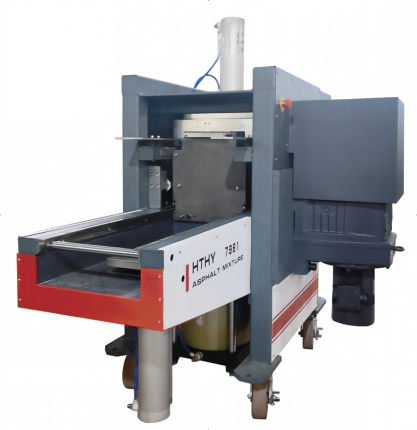
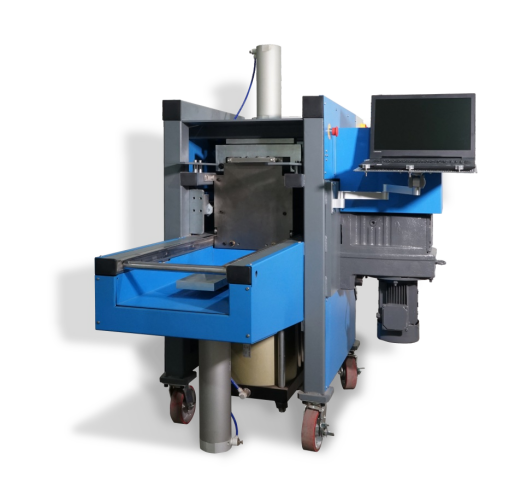
The equipment is designed and manufactured in accordance with ASTM D7981, Standard Practice for Compaction of Prismatic Asphalt Specimens by Means of the Shear Box Compactor. The shear box compactor simulates the shearing and compaction actions experienced by asphalt mixtures during field construction, producing specimens that closely represent field-compacted conditions. The compacted prismatic specimens can be cut into different shapes and sizes according to testing requirements for further performance evaluation, minimizing the influence of specimen variability on test results.
Standard
ASTM D7981
Key Features
-
Horizontal shearing action is controlled by a high-precision servo motor.
-
The shear angle is continuously adjustable up to a maximum of 4°.
-
High-precision sensors ensure accurate measurement and control.
-
A PC-based control system provides real-time monitoring and display of test data.
-
The system displays shear force, compaction force, specimen height, air void content, and compaction curves in real time, while allowing test parameters to be saved.
-
A dedicated mold loading device ensures uniform distribution of asphalt mixture.
-
Automatic specimen extrusion after completion of compaction.
Technical Specifications
|
Parameter |
Specification |
|
Maximum Shear Angle |
4° |
|
Shear Frequency |
3.7 cycles/min |
|
Maximum Contact Pressure |
2 MPa |
|
Specimen Dimensions |
450 × 150 × (120–185) mm |
|
Power Supply |
AC 220V, 50Hz |
|
Power Consumption |
5 kW |
|
Overall Dimensions |
1900 × 1100 × 1600 mm |
|
Weight |
1200 kg |
Principle
During the compaction process, the two side walls of the mold move horizontally to apply shear forces to the asphalt mixture while vertical compaction pressure is simultaneously applied. Under the combined action of shear force and vertical pressure, aggregate particles achieve a more uniform orientation and internal stress distribution, resulting in a more homogeneous density distribution within the specimen.
A single specimen compacted using the shear box compactor can be cut into multiple cylindrical specimens or beam specimens with consistent aggregate orientation and density characteristics for various performance tests, reducing the effect of specimen variability on test results.
Legend




